
The Gastric Gateway: The Ecology and Adaptive Mechanisms of the Stomach Microbiome

For decades, the human stomach was viewed by the scientific community as a biological “dead zone.” It was widely believed that the extreme, caustic nature of gastric acid—approaching a pH of 1.5 to 3.5—rendered the environment sterile, serving only as a chemical vat to break down proteins and a defensive barrier to incinerate ingested pathogens.
However, modern genomic sequencing and the advent of 16S rRNA gene analysis have revealed a more nuanced reality. The stomach is not a sterile void; it is a specialized microbial habitat. While it lacks the dense, teeming populations found in the lower intestines, the stomach microbiome (or gastric microbiome) is a distinct and sophisticated ecosystem. It serves as a “filtering gateway,” maintaining a delicate balance between the external environment and the highly populated lower digestive tract.
1. Defining the Gastric Environment: A Unique Microbial Habitat
To understand the stomach microbiome, one must first appreciate the harsh reality of its “climate.” In the world of microbiology, the stomach is an extreme environment, comparable to acidic hot springs.
The Gradient of the Digestive Tract
The human digestive system operates on a gradient of microbial density. If we visualize the gut as a river system, the density increases dramatically as we move further down the tract:
- The Mouth: A high-diversity, moderate-density environment (approximately $10^{8}$ organisms per milliliter of saliva).
- The Stomach: A low-density, highly specialized environment ($10^{1}$ to $10^{3}$ colony-forming units (CFU) per gram).
- The Colon: The “delta” of the system, boasting the highest density of life known to science ($10^{11}$ to $10^{12}$ organisms per gram).
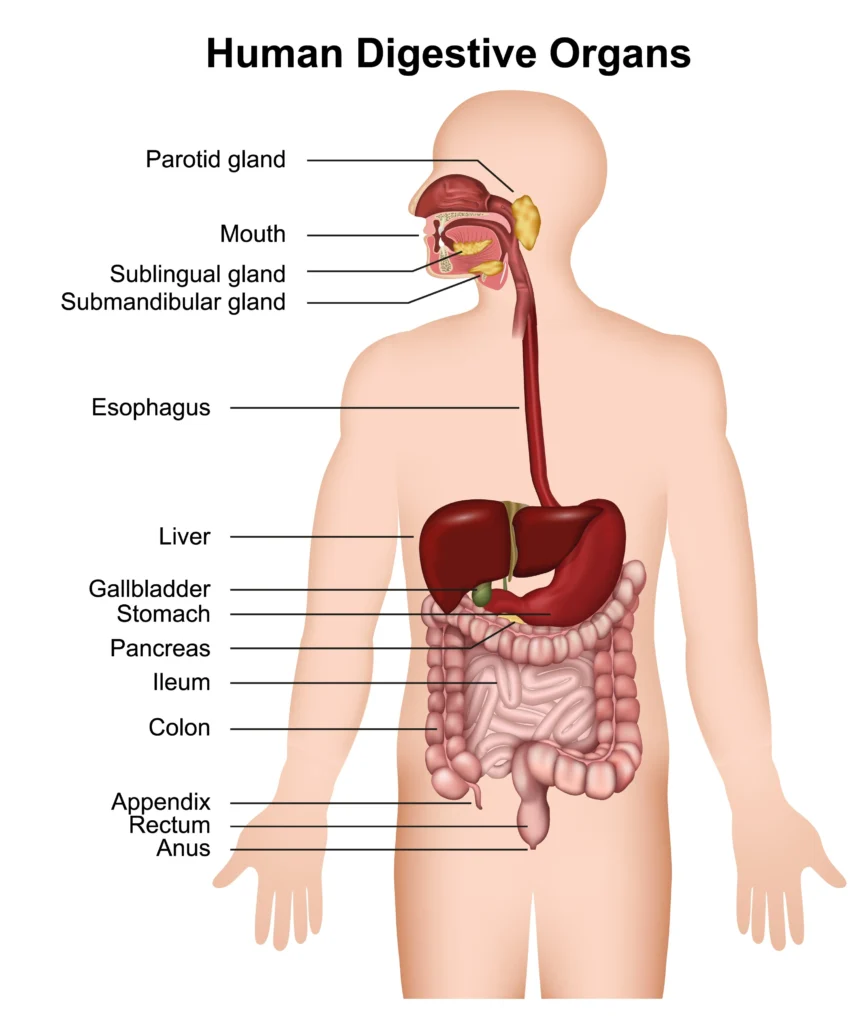
The stomach’s primary role in this gradient is a biological filter. By maintaining a low pH, it prevents the overgrowth of opportunistic bacteria from the mouth and limits the entry of potential pathogens into the small and large intestines.
Anatomical Niches: Transient vs. Resident
Research indicates that microbial life exists in two primary states within the stomach:
- Transient Microbes: Bacteria that are swallowed via saliva or ingested with food. These “passers-by” are often neutralized by acid or simply pass through to the lower tract.
- Mucosa-Associated Microbes: Specialized bacteria that reside within the thick layer of gastric mucus. This mucus protects the stomach lining from its own acid and provides a more neutral pH niche where resident microbes can persist.
2. Survival in the Acid: Evolutionary Adaptations
The microbes that constitute the gastric microbiome are masters of adaptation. They have evolved specific biological mechanisms to thrive within or around high-acid environments.
The Role of Gastric Acidity
Stomach acid, primarily hydrochloric acid (HCl), is the most significant environmental “filter.” It dictates which species can colonize the gastric mucosa. Species found in the stomach are often acid-tolerant or acidophilic.
Adaptive Mechanisms
- Urease Production: Some bacteria produce the enzyme urease, which breaks down urea into ammonia and carbon dioxide. The resulting ammonia creates a localized “cloud” of alkalinity that neutralizes the acid in the bacterium’s immediate vicinity.
- Biofilm Formation: By clustering together in a protective matrix, microbial communities can shield themselves from surrounding acidity.
- Motility and Chemotaxis: Many gastric microbes use flagella (tail-like structures) to swim through the dense mucus toward the stomach lining, where the pH is significantly more neutral (closer to pH 6 or 7) than in the central lumen.
3. Composition of the Stomach Microbiome
While the colon is dominated by the Firmicutes and Bacteroidetes phyla, the stomach presents a different profile. Common phyla observed in a healthy gastric environment include Proteobacteria, Firmicutes, Bacteroidetes, Actinobacteria, and Fusobacteria.
The Ancestral Resident: Helicobacter pylori
In the context of microbial ecology, Helicobacter pylori is a fascinating case study. It has been a member of the human gastric community for at least 60,000 years, having migrated with humans out of Africa.
Scientific Nuance: While H. pylori is considered part of the ancestral microbiome and can exist as a commensal (neutral) resident in many individuals, its balance is delicate. Under certain conditions, it can act as a pathogen, contributing to the development of gastritis or gastric ulcers.
4. Factors Influencing the Gastric Ecosystem
The stomach microbiome is highly dynamic and sensitive to the host’s physiological state.
The Impact of Gastric pH and Medications
The acidity of the stomach is not constant and can be influenced by:
- Diet: Food acts as a temporary buffer, raising the pH and allowing transient microbes to survive the transit.
- Age: Gastric acid production may naturally decrease with age, which often leads to an increase in microbial density in the stomach.
- Medications: Proton Pump Inhibitors (PPIs) and other acid-reducing medications raise the gastric pH. This change in the environment may allow bacteria typically found in the mouth to colonize the stomach. Note: It is essential to consult a healthcare provider before making any changes to prescribed medication regimens.
5. Comparison: Stomach vs. Colon Microbiome
It is a common misconception to treat the “gut microbiome” as a monolithic entity. The stomach and the colon serve entirely different ecological roles.
| Feature | Stomach Microbiome | Colon (Gut) Microbiome |
| Microbial Density | Low ($10^{1}$–$10^{3}$ CFU/g) | Very High ($10^{11}$–$10^{12}$ CFU/g) |
| Environmental Stress | High (Extreme Acidity) | Low (Neutral pH) |
| Primary Function | Filtration and Gatekeeping | Fermentation and Metabolism |
| Dominant Species | Acid-tolerant / Oral migrants | Bacteroidetes and Firmicutes |
| Oxygen Levels | Higher (Microaerophilic) | Extremely Low (Anaerobic) |
6. The Future of Gastric Microbiology
Research into the stomach microbiome is still in its early stages compared to our knowledge of the intestines. As we continue to map this “forgotten ecosystem,” we move away from the idea of the stomach as a simple acid bath and toward an understanding of it as a sophisticated, living barrier essential for the ecological stability of the entire human body.
Educational Disclaimer
This content is for educational purposes only and does not constitute medical advice, diagnosis, or treatment. The discussion of microbial ecology is intended to provide a foundational understanding of human anatomy and microbiology. If you have concerns regarding gastric acidity, digestive symptoms, or bacterial infections, please consult a qualified healthcare professional. Do not use this information to self-diagnose or to alter any medication or supplement regimen.
Scientific References
- Sender, R., Fuchs, S., & Milo, R. (2016). “Revised Estimates for the Number of Human and Bacteria Cells in the Body.” PLoS Biology.
- humans and Helicobacter pylori.” Nature.
- Marshall, B. J., & Warren, J. R. (1984). “Unidentified curved bacilli in the stomach of patients with gastritis and peptic ulceration.” The Lancet.
- Ansari, S., & Yamaoka, Y. (2017). “Survival of Helicobacter pylori in gastric acidic territory.” Helicobacter.
- Ansari, S., & Yamaoka, Y. (2017). “Survival of Helicobacter pylori in gastric acidic territory.” Helicobacter.
- Ansari, S., & Yamaoka, Y. (2017). “Survival of Helicobacter pylori in gastric acidic territory.” Helicobacter.