
Understanding the Human Microbiome: The Foundation of Systemic Health
Disclaimer: This information is for educational purposes only and is not a substitute for professional medical advice, diagnosis, or treatment.
For decades, the human body was viewed as a solitary vessel of human cells and DNA. However, modern biological research has unveiled a more complex reality: we are a thriving, walking ecosystem. Within and upon our bodies reside trillions of microorganisms—bacteria, fungi, viruses, and archaea—that collectively form the human microbiome.
Often referred to as our “second genome,” the human microbiome is a dynamic organ system that plays a fundamental role in processes such as fiber fermentation and the maturation of the immune system’s response to environmental triggers. By understanding this internal landscape, we can move toward a more holistic view of health that treats the human body and its microbial partners as a single, integrated unit.
1. Defining the Human Microbiome: More Than Just “Germs”
To understand the microbiome, we must first distinguish between two terms that are often used interchangeably: microbiota and microbiome.
- Microbiota: Refers to the actual living collection of microorganisms (bacteria, fungi, etc.) residing in a specific environment, such as the gut or the skin.
- Microbiome: Refers to the entire habitat, including the microorganisms, their genomes (DNA), and the surrounding environmental conditions.
The Holobiont Concept

Biologists have recently introduced the concept of the holobiont. This view suggests that a host (the human) and its many microbial residents should be seen as a single biological entity. This relationship is built on commensalism (where one benefits without harming the other) and mutualism (where both benefit). In this partnership, we provide the microbes with a stable home and nutrients, while they perform essential metabolic functions that human DNA is not equipped to handle alone.
2. The Development of the Microbiome: From Birth to Adulthood
The human microbiome is not a static blueprint; it is a living history of our environment and lifestyle. While the womb was once thought to be sterile, we now know that the “seeding” of the microbiome begins at birth.
The Foundation of Life
Research suggests that the mode of delivery—vaginal birth versus cesarean section—serves as the first major microbial inoculation. Infants delivered vaginally acquire bacterial communities resembling their mother’s vaginal microbiota, often dominated by Lactobacillus (Dominguez-Bello et al., 2010). Conversely, those born via C-section may initially host microbes more commonly found on the skin. It is important to note that while initial colonization differs, these differences often tend to normalize over the first few years of life as the child interacts with their environment.

Factors Shaping the Ecosystem
As we grow, several key factors influence our microbiome composition:
- Diet: The transition from breast milk or formula to solid foods introduces new “fuel” for different bacterial species.
- Environment: Exposure to pets, nature, and diverse geographies expands our microbial library.
- Antibiotics: While life-saving, antibiotics can significantly alter the microbial ecosystem; diversity typically returns over time, though the duration of recovery varies.
- Geography: People living in different parts of the world host distinct microbial profiles based on local diets and climates.
3. Microbial Diversity: The Key to Resilience
In ecology, a rainforest is considered healthy if it contains a high variety of plants and animals. The same principle applies to our internal health. Microbial diversity—the variety and abundance of different species—is one of the most significant markers of a robust microbiome.
A diverse microbiome is a resilient one. If one species of bacteria is suppressed, a diverse ecosystem likely has another species that can step in and perform the same metabolic function. Conversely, a loss of diversity is often associated with a state of dysbiosis, a term researchers use to describe an imbalance where less beneficial microbes may begin to dominate.
4. The Functional Landscape: How Microbes Support Us
The human microbiome is an active participant in human physiology. Its primary roles include digestion support, immune education, and the production of vital compounds.

The Role of Metabolic Byproducts
One of the most critical functions of gut bacteria is the fermentation of dietary fiber. Since human enzymes cannot break down certain complex carbohydrates, our microbes do the work for us. This process produces metabolic byproducts, specifically Short-Chain Fatty Acids (SCFAs) (Koh et al., 2016):
- Butyrate: A primary energy source for the cells lining the colon (colonocytes).
- Propionate and Acetate: Which travel through the bloodstream and are being studied for their influence on systemic metabolic health.
Immune System Education
The gut is home to roughly 70–80% of the body’s immune cells. The microbiome acts as a “training academy” for the immune system. According to the “Old Friends” hypothesis, exposure to diverse environmental microbes is necessary for the proper “training” of the human immune system, helping it distinguish between harmless food proteins and dangerous pathogens (Rook, 2013).
5. Beyond the Gut: The Many Microbiomes of the Body
While the gut microbiome receives the most attention, the human body hosts several distinct microbial “neighborhoods,” each with its own unique community.
The Skin Microbiome
The skin is our first line of physical defense. The skin microbiome consists of microbes that thrive in oily, moist, or dry environments. These microbes help maintain the skin’s pH balance and produce antimicrobial peptides that may discourage the growth of harmful pathogens.
The Oral Microbiome
The mouth is the gateway to the digestive tract. The oral microbiome is a complex biofilm that plays a role in dental health. Furthermore, the oral-systemic link is currently being investigated for its potential role in health outcomes further down the digestive line.
6. The Gut-Organ Axes: The Body’s Communication Highway
The microbiome communicates with distant organs through biochemical signaling pathways known as “axes.”
The Gut-Brain Axis

The gut-brain axis is a bidirectional communication system between the central nervous system and the enteric nervous system. While primarily observed in preclinical models, emerging research suggests that microbial metabolites may interact with signaling pathways that influence mood. For example, gut microbes are known to produce neurotransmitters such as GABA and serotonin (Cryan & Dinan, 2012). However, human clinical trials are ongoing to determine the extent of this impact and how much of these locally produced chemicals directly cross the blood-brain barrier.
The Gut-Skin and Gut-Lung Axes
Similarly, the gut-skin axis and gut-lung axis represent pathways where the health of the intestinal microbiome is being explored for its potential link to the inflammatory environment of the skin or the respiratory system.
7. Supporting Your Ecosystem: Lifestyle and Nutrition
Maintaining a balanced microbiome is not about “fixing” a problem with a single protocol, but rather about “gardening” an ecosystem through consistent lifestyle choices.
Prebiotics vs. Probiotics
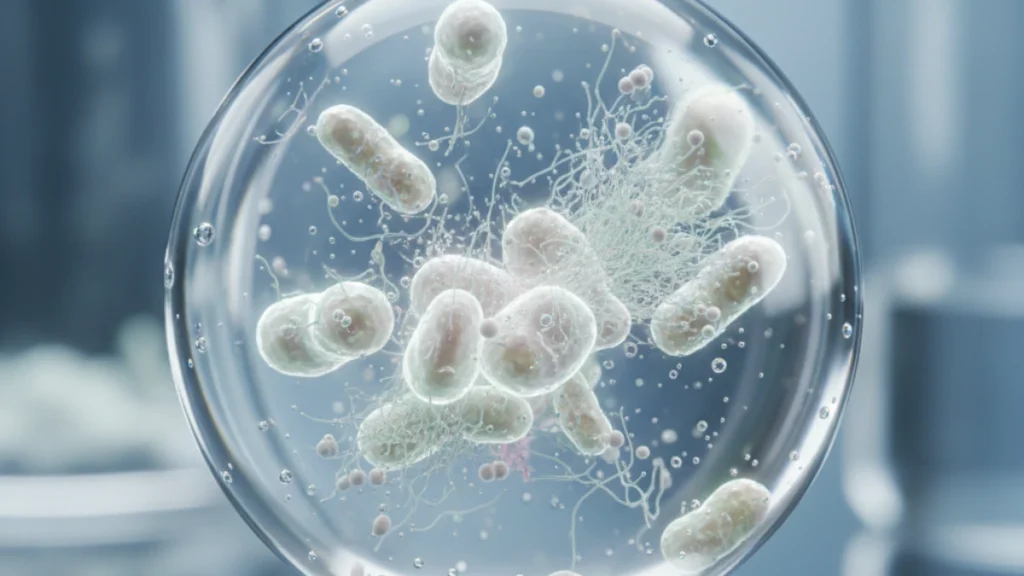
- Prebiotics: These are non-digestible fibers that act as “fuel” for your resident microbes. Think of them as the fertilizer for your internal garden. Found in foods like garlic, onions, leeks, and asparagus.
- Probiotics: These are live microorganisms that, when consumed in adequate amounts, may provide a health benefit. They are found in fermented foods like yogurt, kefir, sauerkraut, and kimchi.
The 30-Plant Observation
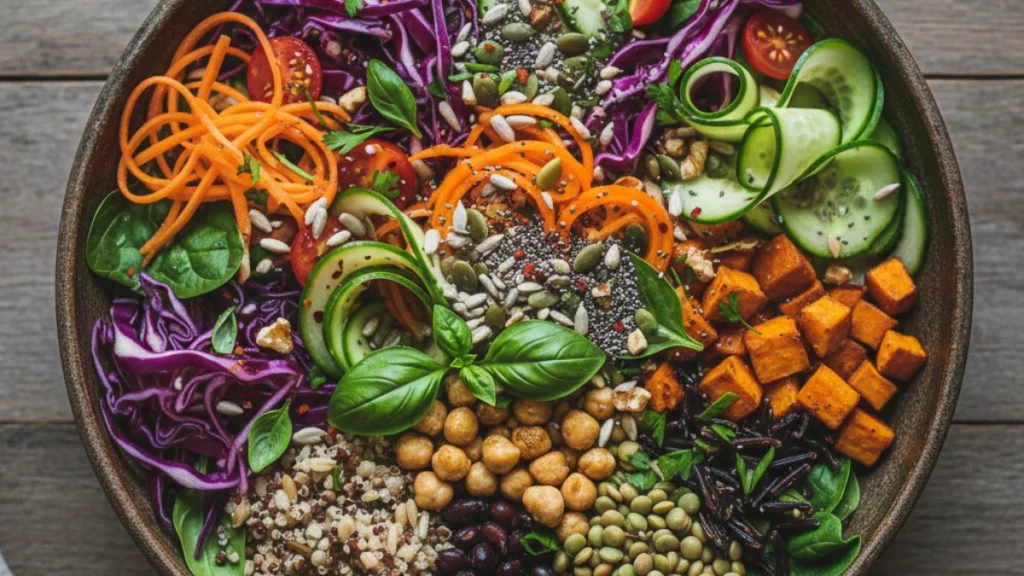
Observational studies, such as the American Gut Project, suggest that individuals who consume upwards of 30 different plant types per week tend to have higher microbial diversity (McDonald et al., 2018). While not a clinical prescription, diversifying plant intake is a widely supported strategy for supporting ecosystem resilience.
8. The Future of Microbiome Science
We are currently in a period of rapid discovery in microbiome research. Scientists are moving away from looking at “good” versus “bad” bacteria and instead looking at functional redundancy—what the microbes are doing rather than just who they are. While many “associations” have been identified, research continues to determine “causation” in many areas of human health.
Conclusion
The human microbiome reminds us that we are a community. By viewing our health through the lens of this internal ecosystem, we can make more informed decisions about our nutrition, environment, and lifestyle. Supporting a balanced microbiome is not a temporary “reset”; it is a lifelong practice of nurturing the “old friends” that support our systemic resilience.
References
- Cryan, J. F., & Dinan, T. G. (2012). Mind-altering microorganisms: the impact of the gut microbiota on brain and behaviour. Nature Reviews Neuroscience.
- Dominguez-Bello, M. G., et al. (2010). Vaginal delivery reports the neonatal intestinal microbiome with maternal vaginal microbes. PNAS.
- Koh, A., et al. (2016). From Dietary Fiber to Host Physiology: Short-Chain Fatty Acids as Key Bacterial Metabolites. Cell.
- McDonald, D., et al. (2018). American Gut: an Open Platform for Citizen Science Microbiome Research. mSystems.
- Rook, G. A. (2013). Regulation of the immune system by biodiversity from the natural environment: An ecosystem service essential to health. PNAS.